The context
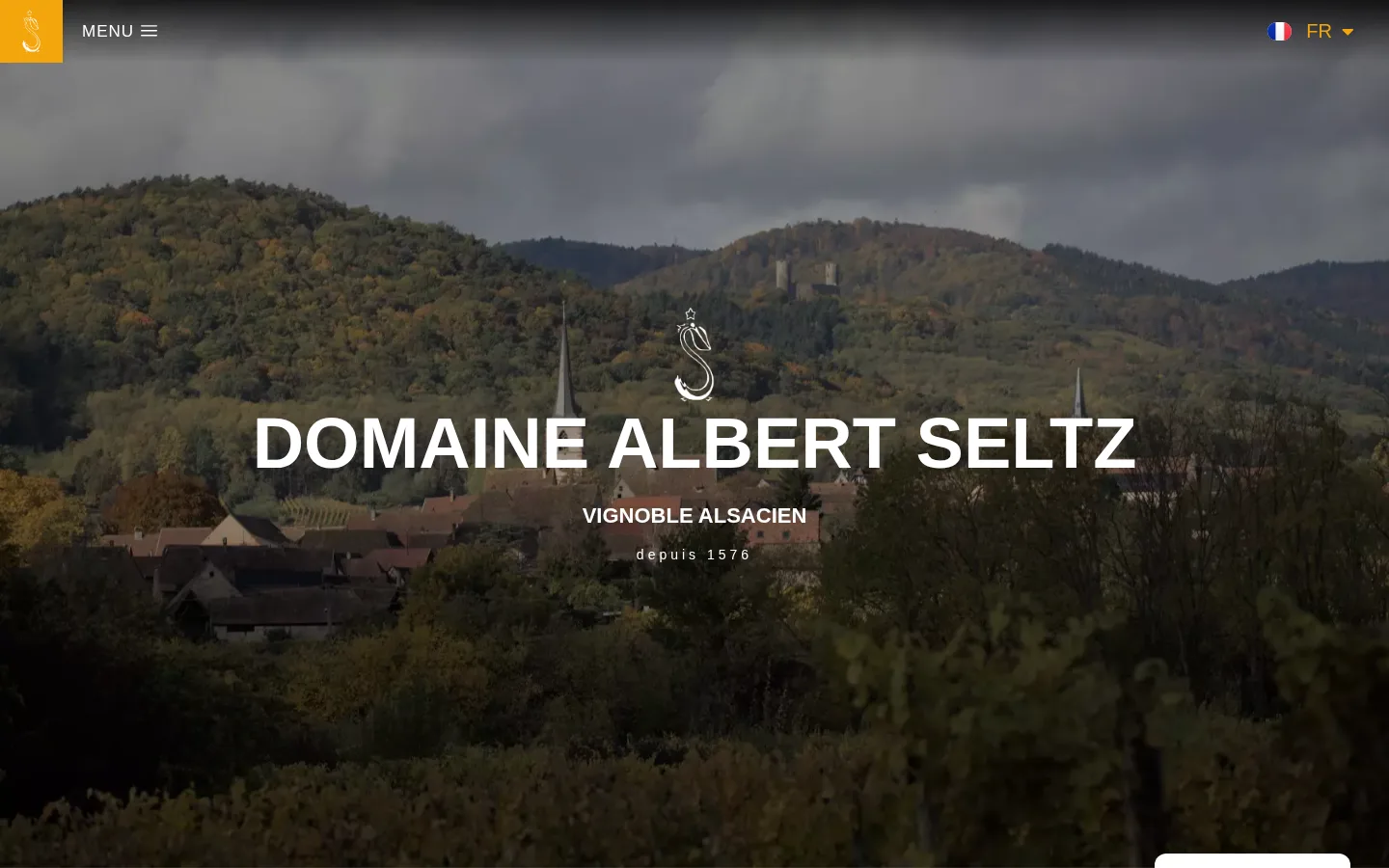
The Albert Seltz estate has grown vines in Mittelbergheim since 1576, with a Riesling Grand Cru Zotzenberg and a cellar open to visitors. The estate wanted a site worthy of that history: to tell it, to show the wines, and to take bookings for tours, tastings and the golf simulator. A foreign clientele calls for two languages, French and English. I ran the site on my own, from the design to the launch, in 2023.
It is a project from before I moved to bespoke development. The site runs on the The7 theme and on Elementor, with a child theme for whatever falls outside that frame. I no longer build sites this way, but this one holds its place: it is online, up to date, and the estate uses it every day.
The goals
- Tell the story of the estate, its cellar and its four centuries, in French and English
- Give every wine its own page, with everything a customer or a wine merchant wants to know before buying
- Let people book a cellar tour or a tasting from the site
The answer
The site unfolds in large pages: the history of the estate, the cellar and the vines, the wines, the experiences to book, the news, the contact page and the newsletter. Every page exists in French and in English, through Polylang.
Each wine is a record of its own in WordPress, with its appellations, its style and its certifications. The page opens on the label in full width, then runs through its sections: composition and declaration, the wine (vintage, terroir, harvest, winemaking), tasting, food pairings, then the invitation to visit the estate. Since the end of 2023, a wine sold in Europe must declare its ingredients and its nutritional values: those details sit on the wine's page, next to the tasting notes.
The layout of the wine pages is written in the child theme, on top of The7 and Elementor. The wine data are fields, not free text: the estate fills in a record, the page builds itself, and every wine is presented the same way.
What I delivered
- The whole site: history, estate, wines, experiences, news, contact and newsletter, in two languages
- A « wine » content type, sorted by appellation, style and certification
- A wine page in sections: composition and declaration, the wine, tasting, food pairings
- The mandatory wine labelling, ingredients, allergens and nutritional values, on the same page
Frequently asked questions
Why a page per wine rather than a list?
Because a wine has to be introduced. The vintage, the terroir, the winemaking, the dish it goes with: none of that fits in a table row. And a page has an address, so it can be shared, printed on a label, and found on Google.
What exactly is the mandatory labelling?
Since the end of 2023, a wine sold in the European Union has to state its ingredients, its allergens and its nutritional values. Many estates point to a web page for this. Here, those details sit on the wine's own page, next to the tasting notes.
Can I add a new vintage myself?
Yes. A wine is a record in WordPress, with its fields. You fill in the vintage, the terroir, the tasting notes and the labelling, and the page builds itself with the same layout as the others.
What does a page like this cost?
A bespoke product page is part of a brochure site, from €2,500 excl. VAT. On an existing site it is a shorter job, quoted after a first conversation.